


Collection:
Pillow cover

Vendor: PishPoshBaby
Fringed Cushion Cover, Green


Vendor: PishPoshBaby
Ribbed Jacquard Cushion Covers, Beige

Vendor: PishPoshBaby
Stitched-Edge Cushion Cover, Burgundy

Vendor: PishPoshBaby
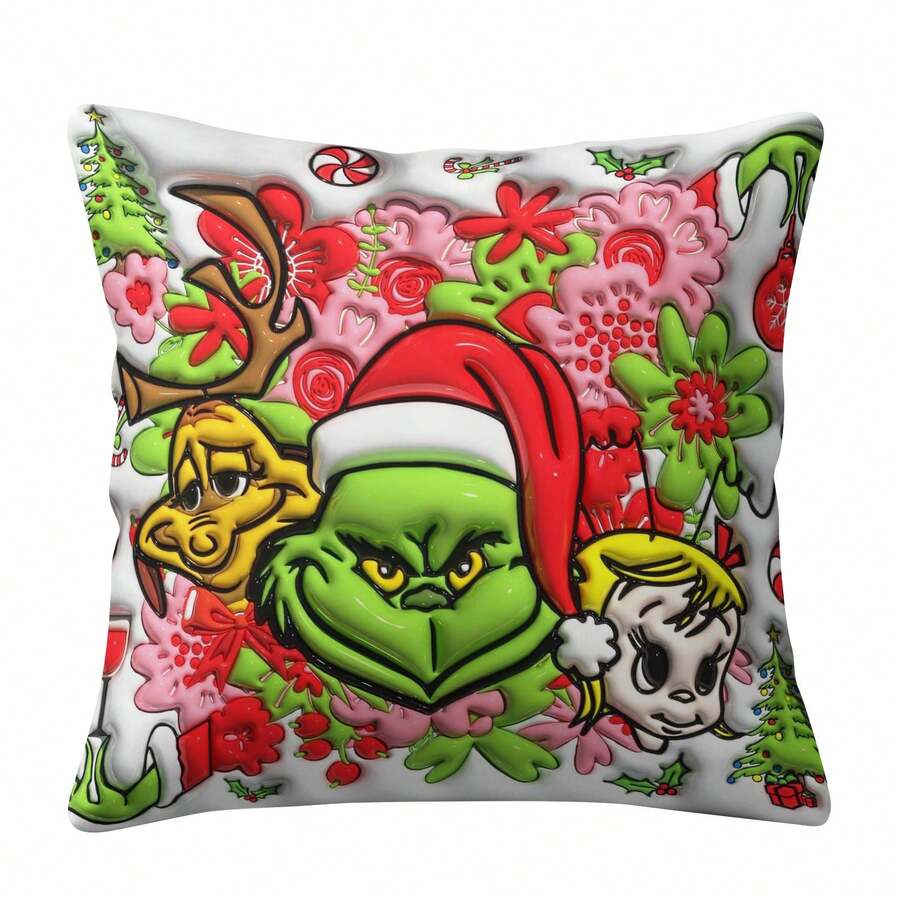
Grinch Printed Cushion Cover, 45 cm Wide


Vendor: PishPoshBaby
Cotton Pillowcase Pair, 13 x 18 in

Vendor: PishPoshBaby
Polyester Satin Pillowcase Pair, 14 x 20 in

Vendor: PishPoshBaby
Zippered Microfiber Pillowcase Pair, 13 x 18 in


Vendor: PishPoshBaby
Ghost Embroidered Cushion Cover, 40–50 cm

Vendor: PishPoshBaby
Nursing Pillow Cover Pair, Banana Leaf


Vendor: PishPoshBaby
Viscose Pillowcase Pair, 50 x 36 cm
A replacement pillow cover provides a fresh outer layer for an existing pillow, useful when another cover is in the wash. The insert stays the same, so matching its shape, depth, and intended cover type comes first.
Match the insert you already own
Begin with the pillow's identifying details and full dimensions. Rectangular pillowcases and covers shaped around curves or cutouts solve different fitting problems; a similar outline is not enough to establish compatibility.
Depth matters alongside length and width. For a cover made for a particular pillow design, look for an explicit match rather than stretching a smaller cover over the insert.
Choose the opening and fabric
If offered, an envelope opening uses overlapping fabric, while a zippered opening has a fastening to undo for removal. The opening needs to accommodate the insert's shape without forcing it through.
Read fiber composition and fabric construction separately. A smooth surface and a textured surface offer different everyday feels, but neither description establishes waterproofing or protection for the filling.
Plan a spare around washing
A spare cover lets you replace the outer layer while another is being cleaned. Choose care requirements that suit your laundry routine, including any drying or shrinkage guidance.
The cover and inner pillow may have different care labels. Confirm the number of covers supplied and whether an insert is included; photographs showing a filled shape do not establish package contents.
Questions about pillow cover
Can a pillow cover serve as a protective liner?
Only if that function is explicitly specified. An ordinary fabric cover should not be assumed to stop liquids from reaching the insert.
Does a new cover change the pillow's permitted use?
No. It does not change user eligibility or make a pillow suitable for infant sleep. The pillow's original purpose and restrictions still apply.


